Why Vulnerability Scanning Matters for Nonprofits
- Gary Sinnott

- Jan 5
- 8 min read

Nearly 40 percent of British organisations report security gaps that put sensitive data at risk. For healthcare and legal SMEs, these vulnerabilities threaten more than just compliance - they jeopardise patient privacy and client trust. If you are an IT security manager, understanding vulnerability scanning is vital for keeping your systems secure. This guide breaks down how British firms can use scanning to strengthen defences, meet regulations, and manage cyber risks more confidently.
Table of Contents
Key Takeaways
Point | Details |
Importance of Vulnerability Scanning | Nonprofits must engage in regular vulnerability scanning to proactively identify and mitigate potential security risks in their digital infrastructure. |
Legal and Compliance Necessity | Vulnerability scanning is essential not only as a best practice but also for compliance with UK regulations like GDPR, which mandate protective measures for personal data. |
Dynamic Assessment Approach | Nonprofits should adopt a continuous vulnerability assessment model, integrating regular scans into their risk management strategies to adapt to evolving cyber threats. |
Resource Management | Address common challenges such as budget constraints and lack of expertise by utilising volunteer support and cost-effective tools to enhance cybersecurity capabilities. |
Defining Vulnerability Scanning for Nonprofits
Vulnerability scanning represents a systematic approach for nonprofits to identify potential weaknesses within their digital infrastructure and operational systems. At its core, this process involves conducting comprehensive assessments that reveal security gaps which could potentially compromise an organisation’s mission-critical services and sensitive data. Vulnerability scanning helps nonprofits proactively recognise system flaws before malicious actors can exploit them.
For nonprofits, vulnerability scanning goes beyond traditional cybersecurity measures. It encompasses a holistic examination of technological assets, network configurations, software applications, and digital communication channels. The primary objective is to create a detailed map of potential entry points that cybercriminals might leverage to breach organisational defences. By systematically evaluating each digital touchpoint, nonprofits can develop targeted strategies to mitigate risks and protect their valuable resources.
The practical implementation of vulnerability scanning involves several key stages. These typically include automated scanning tools that probe systems for known vulnerabilities, manual assessments by cybersecurity professionals, and comprehensive reporting that highlights critical weaknesses. Nonprofits must understand that these scans are not one-time events but ongoing processes requiring regular monitoring and updates. Each scan provides insights into emerging threats, helping organisations adapt their security postures dynamically.
Practical Tip: Start by conducting an initial baseline vulnerability scan to understand your nonprofit’s current security landscape and prioritise remediation efforts based on potential impact.
Types of Vulnerability Scans and Key Differences
Nonprofits encounter diverse vulnerability scanning approaches, each designed to address specific technological risks and organisational needs. Different vulnerability scanning techniques offer unique insights into potential security weaknesses, ranging from network-level assessments to application-specific examinations. These scanning methods can be broadly categorised into network, application, authenticated, and unauthenticated scans, each serving distinct purposes in a comprehensive cybersecurity strategy.
Network vulnerability scans examine an organisation’s entire digital infrastructure, identifying potential entry points and systemic weaknesses across interconnected systems. Application vulnerability scans drill down into specific software applications, investigating potential coding flaws, configuration errors, and potential exploitation vectors. Authenticated scans provide deeper insights by simulating attacks with valid user credentials, while unauthenticated scans mimic external threat perspectives, revealing vulnerabilities visible from outside the organisation’s network.

The selection of appropriate vulnerability scanning techniques depends on several critical factors, including an organisation’s technological complexity, available resources, and specific risk profile. Nonprofits must consider dynamic application security testing, which evaluates running applications, alongside static application security testing, which examines source code for potential vulnerabilities. Additional specialised scans like software composition analysis and container operating system scans can provide granular insights into potential security risks across different technological layers.
The following table summarises key differences between major types of vulnerability scans for nonprofits:
Scan Type | Purpose | Typical Use Case | Level of Depth |
Network | Identify weak points in infrastructure | Entire IT network assessment | Broad, surface-level |
Application | Analyse software for code flaws | Testing nonprofit web portals or apps | Deep, code-focused |
Authenticated | Simulate risks from legitimate users | Internal systems review | High, privileged insight |
Unauthenticated | Reveal exposures visible to external attackers | Perimeter security checks | Moderate, outsider view |
Pro Tip: Develop a balanced vulnerability scanning approach by combining multiple scan types and conducting assessments at least monthly to maintain a comprehensive understanding of your nonprofit’s evolving security landscape.
Legal and Compliance Drivers in the UK
UK nonprofits face a complex landscape of legal and regulatory requirements that make vulnerability scanning not just a best practice, but a critical compliance necessity. Compliance auditing and vulnerability assessments are mandated by key data protection frameworks such as the UK General Data Protection Regulation (GDPR) and the Data Protection Act. These regulations explicitly require organisations to implement appropriate technical measures that protect personal data from potential security breaches, with vulnerability scanning serving as a fundamental component of this protective strategy.
The legal landscape demands that nonprofits demonstrate proactive risk management and due diligence in protecting sensitive information. Statutory obligations require organisations to conduct regular vulnerability assessments that identify and mitigate potential security weaknesses. This goes beyond mere recommendations, transforming vulnerability scanning into a legal requirement that can potentially shield nonprofits from significant financial penalties and reputational damage associated with data breaches. Regulators increasingly expect organisations to maintain comprehensive documentation of their security practices, including detailed vulnerability scanning reports and remediation efforts.
Moreover, the compliance drivers extend beyond data protection legislation. Industry-specific regulations and governance frameworks often mandate rigorous security practices, particularly for nonprofits handling sensitive personal or financial information. These requirements create a multilayered compliance environment where vulnerability scanning becomes a critical tool for demonstrating organisational accountability. Nonprofits must understand that compliance is not a one-time achievement but an ongoing process of continuous assessment, monitoring, and improvement of their technological security infrastructure.
Pro Tip: Develop a systematic compliance documentation process that tracks vulnerability scan results, remediation actions, and regulatory alignment to create a comprehensive audit trail for potential regulatory inspections.
How Scanning Reduces Nonprofit Cyber Risks
Nonprofits operate in an increasingly complex digital landscape where cyber risks can potentially compromise their entire mission and operational integrity. Regular vulnerability scanning provides a critical defense mechanism against evolving cyber threats by systematically identifying and addressing potential security weaknesses before they can be exploited by malicious actors. This proactive approach transforms vulnerability scanning from a technical exercise into a strategic risk management tool that directly protects an organisation’s most valuable assets: its data, reputation, and continued ability to serve its community.
The risk reduction process involves multiple layers of protection. Comprehensive vulnerability scanning enables nonprofits to map their entire digital ecosystem, uncovering hidden vulnerabilities in network configurations, software applications, and system interfaces. By identifying potential entry points for cybercriminals, organisations can prioritise and remediate risks strategically. This approach is particularly crucial for nonprofits handling sensitive donor information, beneficiary data, and financial records, where a single security breach could result in catastrophic consequences including financial loss, legal penalties, and irreparable reputational damage.
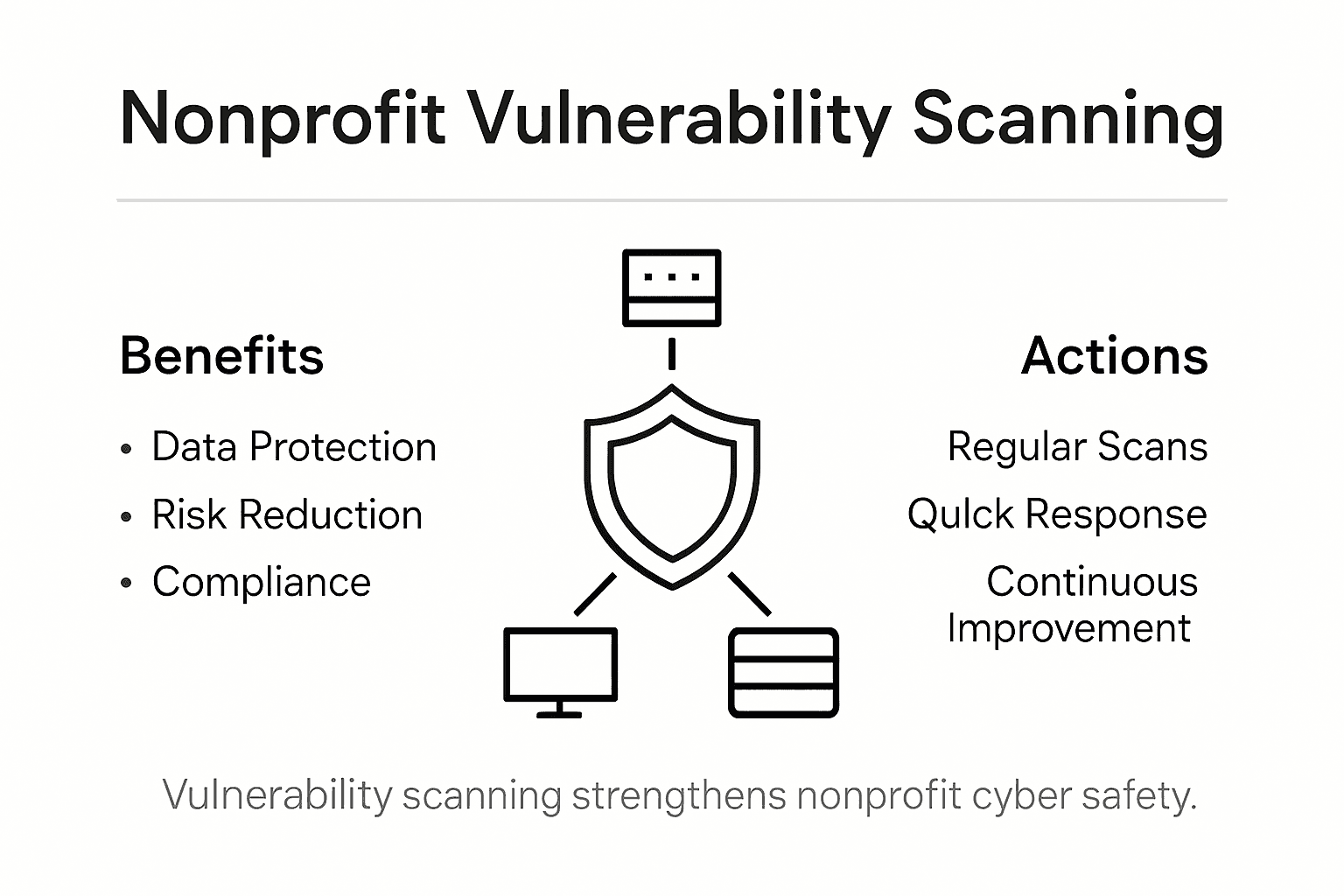
Moreover, vulnerability scanning supports continuous improvement in cybersecurity practices. The insights gained from regular scans allow nonprofits to develop more resilient technological infrastructures, understand their evolving risk landscape, and implement targeted security enhancements. This ongoing process creates a dynamic defense mechanism that adapts to emerging threats, ensuring that the organisation remains one step ahead of potential cyber risks. By treating vulnerability scanning as an integral part of their risk management strategy, nonprofits can demonstrate their commitment to responsible digital stewardship and maintain the trust of donors, partners, and beneficiaries.
Pro Tip: Implement a monthly vulnerability scanning schedule and create a standardised response protocol for addressing detected vulnerabilities, ensuring consistent and timely risk mitigation.
Overcoming Common Challenges and Misconceptions
Nonprofits often encounter significant barriers when implementing vulnerability scanning, rooted in misconceptions about cybersecurity complexity and resource requirements. Horizon scanning techniques provide a strategic approach to anticipating and addressing emerging cyber risks by helping organisations move beyond reactive security models. Many nonprofit leaders mistakenly believe that vulnerability scanning is an expensive, time-consuming process reserved for large corporations, when in reality, it can be a scalable and cost-effective risk management strategy tailored to their specific operational needs.
One prevalent misconception is the assumption that a single comprehensive scan provides permanent protection. Continuous vulnerability assessment is crucial, as cyber threats evolve rapidly and new vulnerabilities emerge constantly. Nonprofits must develop a dynamic scanning approach that goes beyond periodic checks, integrating regular assessments into their ongoing risk management framework. This requires shifting from a static, compliance-driven mindset to a proactive, adaptive cybersecurity strategy that recognises the fluid nature of digital threats.
Resource constraints often create additional challenges for nonprofits seeking to implement robust vulnerability scanning practices. Many organisations struggle with limited technical expertise, budget limitations, and competing priorities. To overcome these obstacles, nonprofits can explore collaborative approaches such as shared cybersecurity resources, volunteer technical expertise, and cost-effective scanning tools designed specifically for smaller organisations. The key is to view vulnerability scanning not as an optional luxury, but as a fundamental component of responsible digital stewardship that protects the organisation’s mission, reputation, and stakeholder trust.
This table outlines common challenges faced by nonprofits and practical mitigation strategies:
Challenge | Underlying Cause | Practical Solution |
Limited technical expertise | Small IT teams or few specialists | Leverage volunteers and external support |
Restricted budgets | Financial constraints on technology | Use low-cost or open-source tools |
Misconceptions about effort | Overestimate time or resource needs | Start small, expand gradually |
Inconsistent assessments | Lack of formal processes | Establish scheduled regular scans |
Pro Tip: Develop a phased vulnerability scanning approach that starts with critical systems, gradually expanding coverage while building internal cybersecurity capabilities through training and incremental investments.
Strengthen Your Nonprofit’s Cyber Defences with Expert Vulnerability Management
Nonprofits face critical challenges in protecting sensitive data and maintaining digital resilience. The article highlights how regular vulnerability scanning reveals hidden weaknesses before cyber criminals can exploit them. If your organisation struggles with limited resources or managing ongoing security assessments, you are not alone. Key terms like continuous vulnerability assessment and compliance documentation point to the need for a strategic, expert-led approach that evolves with emerging threats.
At Freshcyber, we specialise in helping small and medium sized enterprises including nonprofits develop tailored vulnerability management programmes. Our Virtual CISO service provides senior security leadership, including detailed vulnerability assessments, strategic gap analysis and risk prioritisation. We help you build a robust security posture that meets UK compliance demands while addressing your specific risks. Visit our Vulnerability Management and Compliance resources for practical insights and support.

Take control of your nonprofit’s cyber risk today by partnering with Freshcyber. Transform vulnerability scanning from a daunting task into a manageable, ongoing strategy that protects your mission and stakeholders. Explore how our expertise can safeguard your organisation by visiting Freshcyber now and starting your journey towards digital resilience.
Frequently Asked Questions
What is vulnerability scanning for nonprofits?
Vulnerability scanning is a systematic process that helps nonprofits identify potential security weaknesses in their digital infrastructure and operational systems, enabling them to proactively address risks before they can be exploited.
Why is vulnerability scanning important for nonprofits?
It is crucial for nonprofits as it protects sensitive data, ensures compliance with legal regulations, and helps safeguard the organisation’s mission and reputation from potential cyber threats.
How often should nonprofits conduct vulnerability scans?
Nonprofits should conduct vulnerability scans at least monthly to maintain an up-to-date understanding of their security landscape and to address new and emerging threats effectively.
What types of vulnerability scans should nonprofits consider?
Nonprofits should consider a combination of network, application, authenticated, and unauthenticated scans to comprehensively assess their security posture and address specific technological risks.
Recommended
Comments