Step by Step Vulnerability Assessment for UK SMEs
- Gary Sinnott

- Jan 13
- 7 min read

Over 60 percent of British SMEs have experienced cyber threats that could have been prevented with a thorough vulnerability assessment. For IT security managers, safeguarding business systems requires more than just reactive defence. Setting up your environment and choosing the right scanning tools is the crucial first step to securing your organisation. This guide empowers British teams with a strategic, step-by-step process to uncover weaknesses and build stronger cyber resilience.
Table of Contents
Quick Summary
Key Point | Explanation |
1. Conduct thorough asset inventory | Create a comprehensive inventory of all network assets for a complete vulnerability assessment scope. |
2. Choose appropriate scanning tools | Select tools that suit your technological ecosystem for effective vulnerability scanning and reporting. |
3. Prioritise vulnerabilities effectively | Use a risk evaluation framework to categorise vulnerabilities based on severity and potential business impact. |
4. Verify remediation of identified issues | Rescan systems post-remediation to confirm vulnerabilities have been effectively addressed and closed. |
5. Treat vulnerability assessment as ongoing | Establish regular schedules for reassessments to maintain continuous monitoring and proactive security management. |
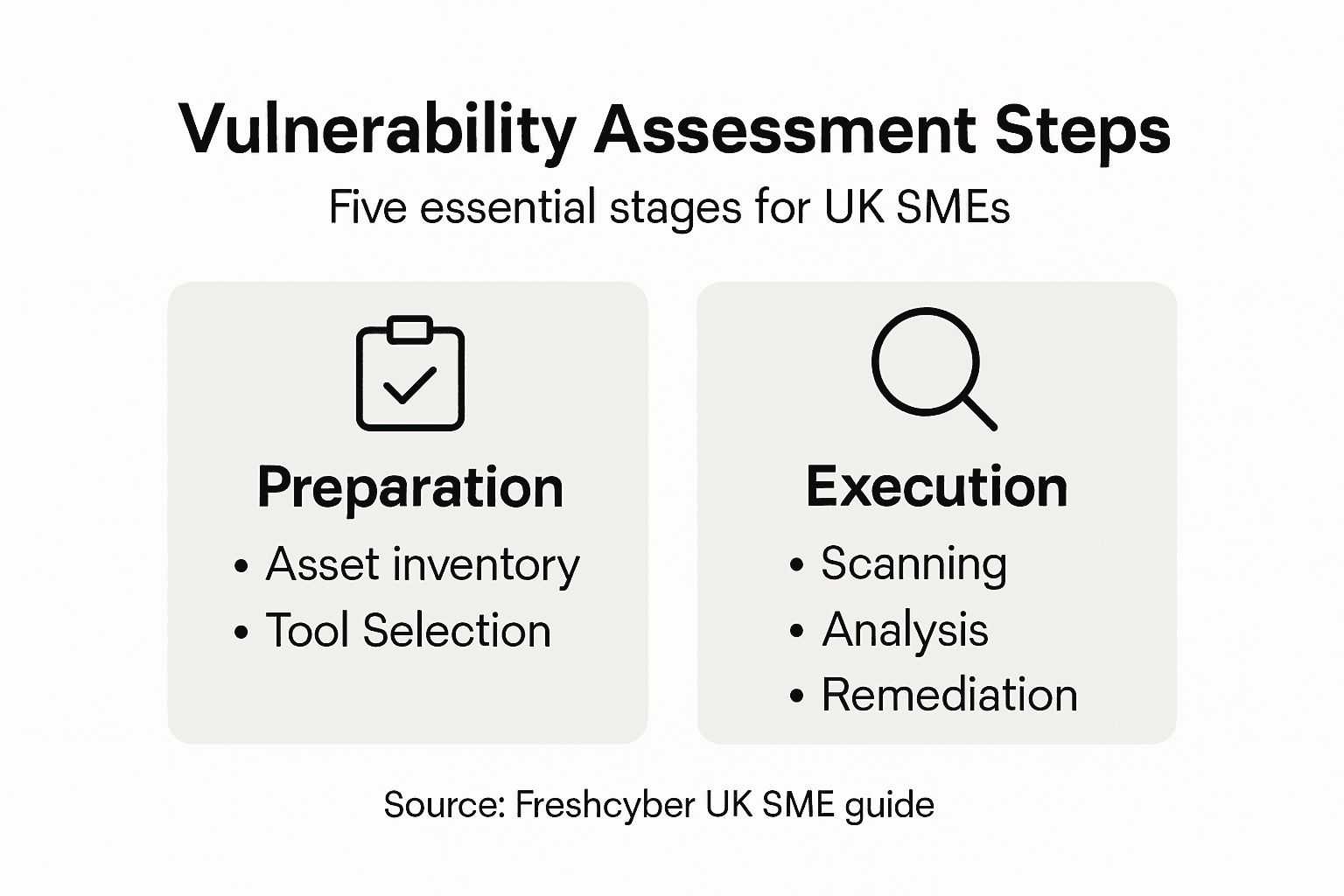
Step 1: Prepare your environment and obtain necessary tools
Before diving into your vulnerability assessment, you need a strategic approach to setting up your scanning environment. This preparation stage is crucial for ensuring accurate and comprehensive results across your organisation’s digital infrastructure.
Start by conducting a comprehensive inventory of all your network assets including servers, workstations, cloud services, and network devices. You want a complete picture of what systems will be included in the assessment. The National Cyber Security Centre provides guidance on selecting appropriate scanning tools that match your specific technological ecosystem. Consider both automated scanning solutions and manual assessment techniques to create a robust evaluation strategy.
When selecting vulnerability assessment tools, prioritise solutions that offer comprehensive scanning capabilities, integration with your existing systems, and detailed reporting functionalities. Look for tools that can perform both external and internal network scans, support multiple operating systems, and provide actionable insights into potential security weaknesses. Some tools offer agent based scanning while others can perform agentless assessments choose based on your network architecture and complexity.
Here is a concise comparison of agent-based and agentless vulnerability scanning approaches:
Approach | Main Advantages | Potential Limitations | Best Use Case |
Agent-based | Deep system insight; configuration detail | Requires installation and management | Large, varied environments with critical data |
Agentless | Quick deployment; minimal disruption | Limited visibility; less control | Broad scans of simple or segmented networks |
Helpful Insight: Allocate dedicated hardware or virtual machines specifically for vulnerability scanning to prevent performance impacts on production systems and ensure clean assessment results.
Step 2: Gather and document system and network information
Documenting your system and network infrastructure forms the critical foundation of a comprehensive vulnerability assessment. This step requires meticulous attention to detail and systematic information collection to create a robust baseline for identifying potential security weaknesses.
Begin by creating a detailed network topology diagram that maps out all interconnected systems, including physical and virtual infrastructure. This should encompass servers, workstations, network devices, cloud services, and any remote access points. Agile Guarding’s security risk assessment framework emphasises the importance of structured documentation during cybersecurity evaluations. Your documentation should include critical details such as operating system versions, installed software, network configurations, IP addressing schemes, and current patch levels for each system.

For each network component, compile a comprehensive inventory that goes beyond basic hardware information. Record software versions, configuration settings, network roles, and interdependencies between systems. Pay special attention to legacy systems, third party applications, and any custom software deployments that might introduce unique vulnerabilities. Consider using spreadsheet templates or specialised asset management tools to standardise your documentation process and ensure consistent information capture across your entire technological ecosystem.
Helpful Insight: Create a living document that can be regularly updated to maintain an accurate snapshot of your organisation’s technological landscape.
Step 3: Execute internal and external vulnerability scanning
Vulnerability scanning represents a critical phase in your cybersecurity assessment, requiring a systematic approach to identify potential weaknesses across your organisation’s digital infrastructure. You will simultaneously probe both internal and external network environments to uncover security gaps that could potentially expose your business to cyber risks.
Begin with external scanning, which examines your organisation’s internet facing systems and perimeter defences. External vulnerability scanning techniques help map out potential entry points that attackers might exploit. Configure your scanning tools to simulate real world attack scenarios, checking for open ports, misconfigurations, outdated software versions, and potential network vulnerabilities. Use authenticated scanning methods that provide deeper insights into system configurations, ensuring comprehensive coverage beyond surface level assessments.
For internal scanning, switch focus to your organisation’s network infrastructure, including servers, workstations, and internal systems. This phase requires careful navigation to minimise disruption to operational activities. Run scans during low traffic periods, use agent based scanning where possible, and ensure you have proper authorisation from system administrators. Cross reference results between external and internal scans to build a holistic understanding of your security posture, identifying interdependencies and potential vulnerability chains that might not be apparent from isolated assessments.
Helpful Insight: Configure your vulnerability scanner to perform incremental scans that capture changes without repeatedly scanning entire infrastructure, saving time and reducing network strain.
Step 4: Analyse scan results and prioritise vulnerabilities
Analysing vulnerability scan results demands a strategic approach that transforms raw data into actionable cybersecurity insights. Your goal is to translate technical findings into a clear roadmap for addressing potential security risks across your organisation’s digital infrastructure.
Vulnerability prioritisation strategies should focus on assessing each identified vulnerability through a structured risk evaluation framework. Begin by categorising vulnerabilities based on their severity level critical, high, medium, and low risk. Consider multiple dimensions beyond just the technical score including potential business impact, ease of exploitation, and the specific systems or data at risk. Assign a comprehensive risk rating that combines the vulnerability’s technical severity with its potential real world consequences to your organisation.
This summary highlights typical risk factors considered during vulnerability prioritisation:
Risk Factor | Example Consideration | Impact on Prioritisation |
Severity Level | Critical, High, Medium, Low ratings | Directs urgency of response |
Business Impact | Affects key assets or sensitive data | Rises in priority |
Exploit Likelihood | Availability of public exploit tools | Increases response urgency |
System Exposure | Internet-facing or internal-only presence | External exposed rated higher |
Develop a systematic approach to addressing these vulnerabilities by creating a detailed remediation plan. Prioritise critical and high risk vulnerabilities that could provide direct pathways for potential attackers, focusing on those with known exploits or those affecting critical business systems. For each vulnerability, document specific remediation steps, assign responsible team members, and establish clear timelines for addressing the identified security gaps. Maintain a living document that tracks progress, allowing you to demonstrate continuous improvement in your cybersecurity posture.
Helpful Insight: Create a risk scoring matrix that balances technical vulnerability details with potential business disruption to make more informed prioritisation decisions.
Step 5: Verify remediation and conduct follow-up evaluation
Verifying the effectiveness of your vulnerability remediation efforts represents a critical final phase in your cybersecurity assessment process. This step ensures that the vulnerabilities you identified have been genuinely addressed and closed, preventing potential security breaches.
Begin by conducting a comprehensive rescan of your network infrastructure, focusing specifically on the systems and vulnerabilities previously identified. Vulnerability management workflow recommendations suggest using the same scanning tools and configurations employed during your initial assessment to ensure direct comparability of results. Systematically check each previously identified vulnerability to confirm that the implemented remediation strategies have successfully mitigated the risks. Pay close attention to any remaining or newly emerging vulnerabilities that might have been introduced during the remediation process.
Develop a detailed follow up report that documents the remediation progress, highlighting successfully closed vulnerabilities, any persistent issues, and recommendations for ongoing security improvements. This report should include a clear comparison between the initial vulnerability assessment and the current security state, providing tangible evidence of your organisation’s cybersecurity enhancement efforts. Establish a regular schedule for repeated vulnerability assessments to maintain continuous monitoring and proactive security management.
Helpful Insight: Treat vulnerability management as an ongoing process, not a one time event, by scheduling regular reassessments and maintaining a dynamic approach to cybersecurity.
Strengthen Your Vulnerability Assessment with Freshcyber’s Expert Support
Identifying and prioritising vulnerabilities can feel overwhelming for UK SMEs trying to secure their digital environments. This article breaks down the step-by-step process of vulnerability assessment, highlighting challenges such as comprehensive asset documentation and effective remediation tracking. If managing these risks while maintaining day-to-day operations is your concern, Freshcyber can help you build a proactive security strategy tailored to your needs. Our Virtual CISO service combines executive-level expertise with practical risk management to ensure your business stays one step ahead of cyber threats.

Take control of your cybersecurity today with Freshcyber’s trusted partnership. Explore our Vulnerability Management and SME Security solutions to achieve resilient defences aligned with compliance standards. Visit Freshcyber to start your journey towards robust protection and peace of mind.
Frequently Asked Questions
What is a vulnerability assessment for SMEs?
A vulnerability assessment for small and medium enterprises (SMEs) is a systematic process to identify, evaluate, and prioritise potential security weaknesses in an organisation’s network and systems. Start by gathering an inventory of all your digital assets and then follow a structured approach to conduct scans and analyses.
How do I prepare my environment for a vulnerability assessment?
To prepare your environment, conduct an inventory of all network assets, including servers and devices. Document your current systems and decide on the scanning tools to use, which should offer thorough scanning capabilities and detailed reporting.
What steps should I take to analyse vulnerability scan results?
Begin by categorising identified vulnerabilities by severity: critical, high, medium, or low risk. Create a prioritisation matrix that assesses the potential business impact and likelihood of exploitation to develop a clear remediation plan.
How can I verify that vulnerabilities have been remediated?
Conduct a comprehensive rescan of your network to check if previously identified vulnerabilities have been addressed. Ensure to use the same scanning tools and configurations as in your initial assessment for accurate comparison of results.
How often should I perform vulnerability assessments for my organisation?
Schedule vulnerability assessments regularly, ideally every 3 to 6 months, to maintain an ongoing understanding of your security posture. Regular assessments help ensure any new vulnerabilities are identified and addressed promptly.
Recommended
Comments