Role of Security Frameworks: Building SME Resilience
- Gary Sinnott

- Jan 20
- 8 min read

Pressure to protect critical services in the United Kingdom has never been greater for SMEs in the energy and digital sectors. Meeting the expectations of new directives and standards is no longer just a tick-box exercise. Adopting robust security frameworks such as NIS2 and ISO 27001 is now vital for maintaining compliance and building operational resilience. This guide offers practical insight for decision-makers who aim to make security a strategic strength rather than a regulatory headache.
Table of Contents
Key Takeaways
Point | Details |
Importance of Security Frameworks | Security frameworks are essential tools for UK SMEs to enhance cybersecurity and operational resilience, transforming compliance into strategic advantage. |
Key Frameworks for SMEs | UK energy and digital SMEs should adopt frameworks like ISO 27001 and NIS2 to effectively manage cybersecurity challenges and protect critical assets. |
Ongoing Evaluation | Treat security frameworks as living documents that require regular review and adaptation to meet evolving threats and regulatory standards. |
Holistic Risk Management | Effective cybersecurity involves not just internal measures but also a thorough assessment of supply chain risks and legal compliance. |
Core Security Frameworks Defined and Debunked
Navigating the complex world of security frameworks requires strategic understanding beyond generic compliance checkboxes. Security frameworks are structured approaches that help organisations systematically manage cyber risks, protect critical assets, and establish robust defence mechanisms. For UK-based SMEs, particularly in energy and digital sectors, these frameworks are not just bureaucratic requirements but essential strategic tools for operational resilience.
The United Kingdom has developed comprehensive security guidelines that provide clear roadmaps for organisations. UK Government’s Security Policy Framework establishes critical standards for protecting government and private sector assets. These frameworks typically address multiple dimensions: information protection, risk management, infrastructure security, and organisational governance. Key frameworks like ISO 27001, NIS2, and the UK Government Cyber Security Standard offer structured methodologies that transform theoretical security concepts into practical, implementable strategies.
Effective security frameworks share common characteristics that make them powerful risk management tools. They typically include:
Comprehensive risk assessment protocols
Clear governance and accountability structures
Systematic vulnerability identification processes
Continuous monitoring and improvement mechanisms
Adaptable implementation guidelines tailored to organisational context
By adopting these frameworks, SMEs can transform cybersecurity from a reactive expense into a proactive strategic advantage. The goal is not merely achieving compliance, but building organisational resilience that anticipates and mitigates potential security threats before they materialise.
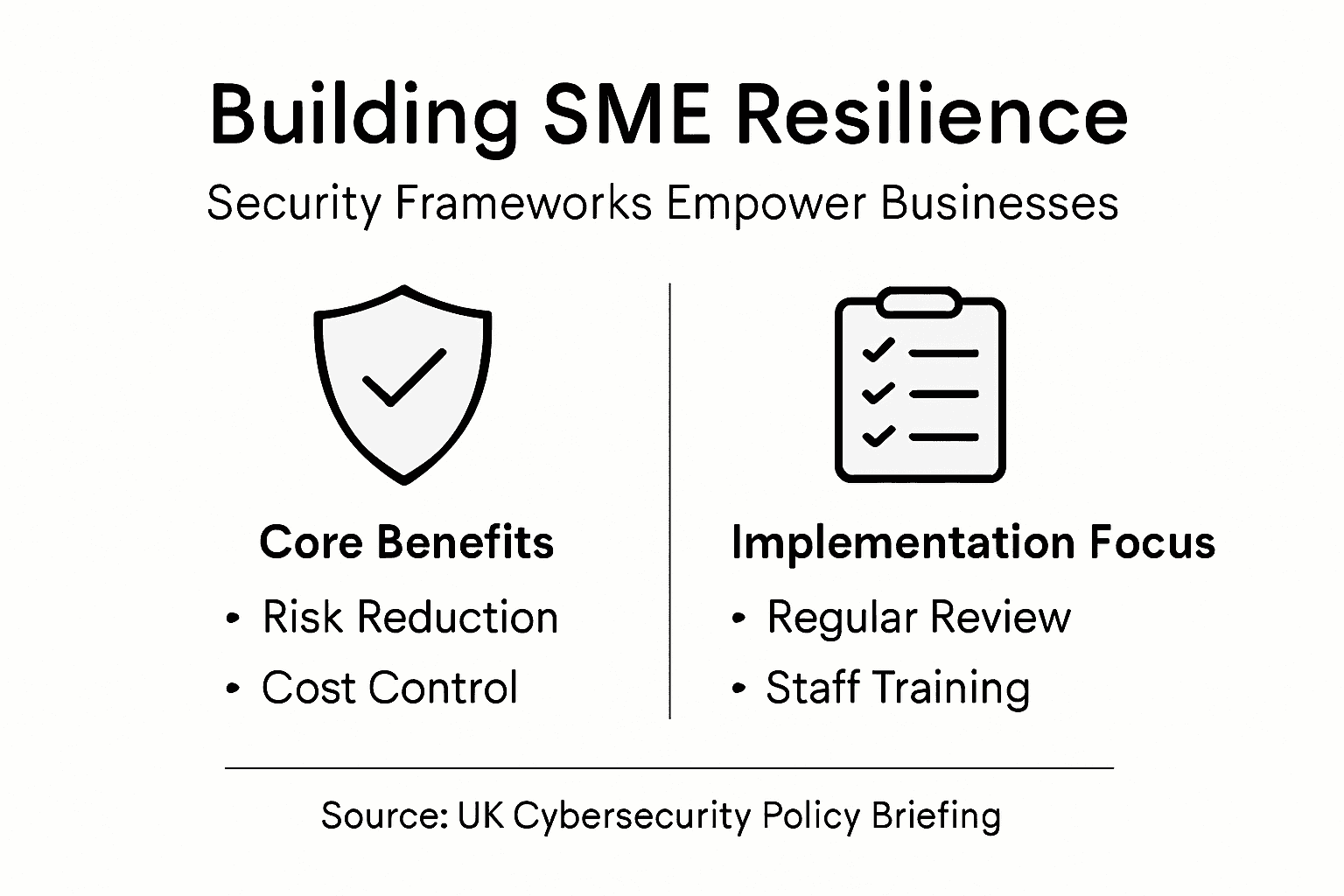
Pro tip: Treat security frameworks as living documents that require regular review and adaptation, not static compliance checklists.
Key Frameworks for UK Energy and Digital SMEs
UK energy and digital SMEs face increasingly complex cybersecurity challenges that demand strategic, comprehensive framework adoption. UK Government Cyber Security Strategy provides a critical roadmap for organisations seeking robust defence mechanisms against evolving digital threats. Understanding and implementing these frameworks is no longer optional but a fundamental requirement for sustainable business operations.
The most pertinent security frameworks for UK energy and digital SMEs include:
ISO 27001: Information Security Management System standard
NIS2 Directive: Network and Information Systems Security Regulation
Cyber Essentials: UK government-backed certification scheme
GDPR: Data protection and privacy framework
IASME Governance Standard: Comprehensive cybersecurity and governance standard
Each framework addresses specific dimensions of organisational cybersecurity. National cybersecurity policy briefings emphasise the critical nature of these frameworks in protecting critical infrastructure against state-sponsored and criminal cyber threats. For energy and digital sector SMEs, this means developing comprehensive risk management strategies that go beyond simple compliance checkboxes.
To help SMEs choose the right framework, here is a concise comparison of the main cybersecurity standards for UK energy and digital organisations:
Framework | Primary Focus | Coverage Scope | Typical Applicability |
ISO 27001 | Information security controls | Whole organisation | All sectors, global usage |
NIS2 Directive | Infrastructure security | Essential services | Critical national sectors |
Cyber Essentials | Baseline technical defence | IT systems and staff | UK SMEs, entry-level |
GDPR | Data privacy and protection | Personal data handling | All EU/UK organisations |
IASME Governance Standard | Cybersecurity and governance | Organisational-wide | SMEs seeking assurance |
Implementing these frameworks requires a holistic approach. SMEs must view security not as a one-time project but as a continuous, evolving process of risk assessment, mitigation, and organisational learning. By integrating multiple frameworks strategically, organisations can create a robust, adaptable security posture that protects against both current and emerging cyber risks.

Pro tip: Conduct an annual comprehensive framework alignment audit to ensure your cybersecurity strategy remains current and effective across multiple regulatory standards.
NIS2 and ISO 27001: Distinctions and Requirements
Navigating the complex landscape of cybersecurity standards requires a nuanced understanding of two pivotal frameworks: NIS2 and ISO 27001. Cyber Security and Resilience Bill highlights the critical distinctions between these complementary yet distinct approaches to organisational security management.
Key differences between NIS2 and ISO 27001 include:
Regulatory Status:
NIS2: Mandatory regulatory directive
ISO 27001: Voluntary international standard
Scope:
NIS2: Focuses on critical infrastructure and essential services
ISO 27001: Applies broadly across organisational information security
Compliance Requirements:
NIS2: Specific mandatory reporting and risk management obligations
ISO 27001: Flexible framework for information security management
UK cybersecurity frameworks demonstrate that while these standards differ in approach, they share a fundamental goal: protecting organisational assets from evolving cyber threats. For UK energy and digital SMEs, this means understanding how to strategically implement both frameworks to create a comprehensive security ecosystem.
For a strategic overview, here is a summary of how NIS2 and ISO 27001 support business risk reduction for SMEs:
Aspect | NIS2 Directive | ISO 27001 |
Legal requirement | Mandatory in UK sectors | Voluntary, globally accepted |
Risk management style | Minimum required controls | Customisable risk methodology |
Reporting obligations | Regulatory incident reports | Internal improvement reports |
Implementation effect | Compliance-driven resilience | Integrated business security |
Practical implementation requires a holistic approach. SMEs should view NIS2 and ISO 27001 not as competing standards, but as complementary tools that address different aspects of cybersecurity. NIS2 provides the regulatory backbone, establishing minimum security requirements, while ISO 27001 offers a flexible, comprehensive methodology for managing information security risks.
Pro tip: Develop an integrated compliance strategy that maps NIS2 regulatory requirements directly onto your ISO 27001 Information Security Management System to maximise efficiency and coverage.
Implementing Frameworks: Strategic Roadmaps and Tools
Successful cybersecurity framework implementation requires a meticulously crafted strategic roadmap that goes beyond simple compliance checkboxes. Government Cyber Security Policy Handbook underscores the critical importance of developing a threat-driven, risk-based approach tailored to an organisation’s unique technological ecosystem.
A comprehensive implementation strategy typically encompasses several key components:
Risk Assessment:
Comprehensive vulnerability mapping
Threat landscape analysis
Critical asset identification
Control Selection:
Technical security measures
Organisational policy development
Governance frameworks
Continuous Monitoring:
Regular vulnerability scans
Incident response readiness
Performance measurement
UK Parliament cybersecurity briefing highlights the critical need for SMEs to develop dynamic, adaptive implementation strategies. This means moving beyond static documentation towards creating living frameworks that evolve with emerging technological landscapes and threat environments.
Implementation is not a one-time event but a continuous journey of refinement and adaptation. Successful organisations treat their cybersecurity frameworks as strategic assets, regularly reviewing and updating their approach to ensure alignment with changing regulatory requirements, technological advancements, and organisational growth trajectories.
Pro tip: Establish a quarterly framework review process that includes cross-functional stakeholders to ensure your cybersecurity strategy remains agile and comprehensive.
Operational Risks, Supply Chain, and Legal Exposure
Operational cybersecurity risks extend far beyond internal technological infrastructures, particularly for UK SMEs in critical sectors like energy and digital services. Government Cyber Security Strategy emphasises the critical importance of comprehensive risk management that encompasses both organisational boundaries and complex supply chain ecosystems.
Key dimensions of operational risk management include:
Supply Chain Vulnerability Assessment:
Third-party vendor security evaluations
Contractual security requirement mapping
Continuous vendor risk monitoring
Legal Compliance Frameworks:
Data protection regulations
Industry-specific cybersecurity mandates
Incident reporting obligations
Financial Risk Mitigation:
Cyber insurance coverage
Incident response cost planning
Regulatory non-compliance penalty assessment
UK Parliamentary cybersecurity briefing highlights the intricate legal exposures SMEs face when managing digital risks. Understanding these complexities requires a proactive approach that integrates robust governance, continuous monitoring, and adaptive risk management strategies.
Successful organisations recognise that supply chain security is not a standalone function but an integrated component of their overall cybersecurity strategy. This holistic perspective demands continuous assessment, transparent communication with partners, and agile response mechanisms that can quickly identify and mitigate emerging vulnerabilities.
Pro tip: Develop a standardised vendor security assessment questionnaire that systematically evaluates potential supply chain risks before establishing business relationships.
Building Ongoing Digital Resilience and Compliance
Digital resilience represents a dynamic, comprehensive approach to cybersecurity that transcends traditional compliance checklists. UK Government Cyber Security Strategy emphasises the critical importance of developing adaptive, proactive security frameworks that evolve with emerging technological landscapes and threat environments.
Key components of building ongoing digital resilience include:
Continuous Skills Development:
Regular cybersecurity training programmes
Threat awareness workshops
Technical skills up-gradation
Adaptive Security Controls:
Dynamic risk assessment mechanisms
Automated threat detection systems
Flexible incident response protocols
Cultural Embedding:
Security-first organisational mindset
Transparent communication channels
Collaborative security approach
Government Cyber Security Policy Handbook advocates for comprehensive monitoring tools and staff training programs that transform cybersecurity from a technical requirement into an integral organisational capability. This approach recognises that resilience is not about achieving a static state of security, but maintaining a continuous, adaptive defence mechanism.
Successful digital resilience requires organisations to view compliance as a strategic opportunity rather than a regulatory burden. By integrating robust frameworks, fostering a culture of security awareness, and maintaining agile response capabilities, SMEs can transform potential vulnerabilities into competitive advantages.
Pro tip: Implement a quarterly security maturity assessment that maps your organisation’s resilience capabilities against evolving national and international cybersecurity standards.
Strengthen Your SME’s Resilience with Expert Security Framework Support
The article highlights the challenge UK SMEs face in moving beyond just ticking compliance boxes to building a truly resilient cybersecurity posture. Many organisations struggle with complex security frameworks like ISO 27001 and NIS2, as well as managing evolving risks across supply chains and digital infrastructures. At Freshcyber, we understand these pain points and help you develop a strategic security roadmap that not only addresses compliance but elevates your whole security posture.
Our flagship Virtual CISO (vCISO) service delivers executive-level leadership to guide SMEs through end-to-end implementation of frameworks tailored to your needs. From comprehensive risk management and vulnerability assessments to continuous compliance oversight, we transform cybersecurity into a business advantage. Discover how we can help secure your operations and supply chain so you stay ahead of threats with confidence.
Secure your digital future today by visiting our SME Security resources and learn how strategic vulnerability management can safeguard your business at Vulnerability Management.

Ready to move from reactive compliance to proactive resilience? Visit Freshcyber now and let us be your dedicated security partner in building sustainable digital defence.
Frequently Asked Questions
What are security frameworks and why are they important for SMEs?
Security frameworks are structured methodologies that help organisations systematically manage cyber risks, protect critical assets, and establish robust defence mechanisms. For SMEs, they are vital for operational resilience and proactive cybersecurity management.
How can SMEs choose the right security framework for their needs?
SMEs can evaluate their specific requirements and the risks they face by comparing frameworks such as ISO 27001, NIS2, Cyber Essentials, GDPR, and IASME Governance Standard. Each framework addresses different aspects of cybersecurity, so understanding the organisational context is essential.
What is the difference between NIS2 and ISO 27001?
NIS2 is a mandatory regulatory directive focusing on critical infrastructure and essential services, while ISO 27001 is a voluntary international standard for information security management applicable broadly across organisations. Both work together to enhance cybersecurity.
How can SMEs implement a security framework effectively?
Implementation should be a continuous process involving comprehensive risk assessments, control selections, and ongoing monitoring. It requires a strategic roadmap that is adaptable to evolving threats and aligned with regulatory standards.
Recommended
Comments