Importance of Cyber Hygiene for SME Resilience
- Gary Sinnott

- Jan 3
- 7 min read
Updated: Jan 4

Most British small and medium organisations do not realise that over 40 percent of cyber attacks target SMEs, putting valuable client data and business operations at serious risk. For IT managers and compliance directors in legal and healthcare sectors, the pressure to maintain regulatory compliance while safeguarding sensitive information has never been greater. This guide breaks down the core principles of cyber hygiene, offering practical steps to help British teams create a more resilient and compliant digital environment.
Table of Contents
Key Takeaways
Point | Details |
Importance of Cyber Hygiene | Cyber hygiene is crucial for organisations to mitigate digital security risks and protect critical information assets. |
Proactive Vulnerability Management | Regular software updates, risk assessments, and continuous monitoring are essential to maintain robust cybersecurity. |
Cultural Engagement | Creating a security-conscious culture is key; all team members should understand their role in safeguarding digital assets. |
Regulatory Compliance Necessity | Organisations must stay updated with legal requirements, ensuring a comprehensive approach to cybersecurity to maintain compliance. |
Defining Cyber Hygiene and Core Principles
Cyber hygiene represents the comprehensive set of practices and principles organisations implement to maintain robust digital security and protect critical information assets. At its core, cyber hygiene is about establishing systematic approaches that reduce technological vulnerabilities and minimise potential security risks across digital environments.
The fundamental principles of cyber hygiene encompass proactive security management, continuous monitoring, and disciplined operational practices. Cybersecurity frameworks like the Cybersecurity Tech Accord emphasise the shared responsibility between individuals, organisations, and technology providers in maintaining secure digital ecosystems. These principles include:
Implementing regular software updates and security patches
Maintaining robust password management protocols
Conducting periodic risk assessments
Establishing clear security policies and employee training programmes
Monitoring network traffic and potential intrusion attempts
Effective cyber hygiene requires a holistic approach that integrates technical controls with human behaviour. UK organisations, particularly small and medium enterprises, must recognise that cybersecurity is not merely a technological challenge but a comprehensive operational strategy. This involves creating a security-conscious culture where every team member understands their role in protecting digital assets.
Pro tip: Conduct a monthly 15-minute cyber hygiene review, checking software updates, reviewing access permissions, and refreshing employee security awareness.
Common Threats and Hygiene Vulnerabilities
Small and medium enterprises in the United Kingdom face an increasingly complex landscape of cybersecurity threats that exploit fundamental weaknesses in digital infrastructure and human behaviour. Threat reports from the National Cyber Security Centre consistently highlight how cybercriminals target organisations with inadequate cyber hygiene practices, transforming seemingly minor vulnerabilities into significant security breaches.
The most prevalent threats confronting UK SMEs include sophisticated attack vectors such as:
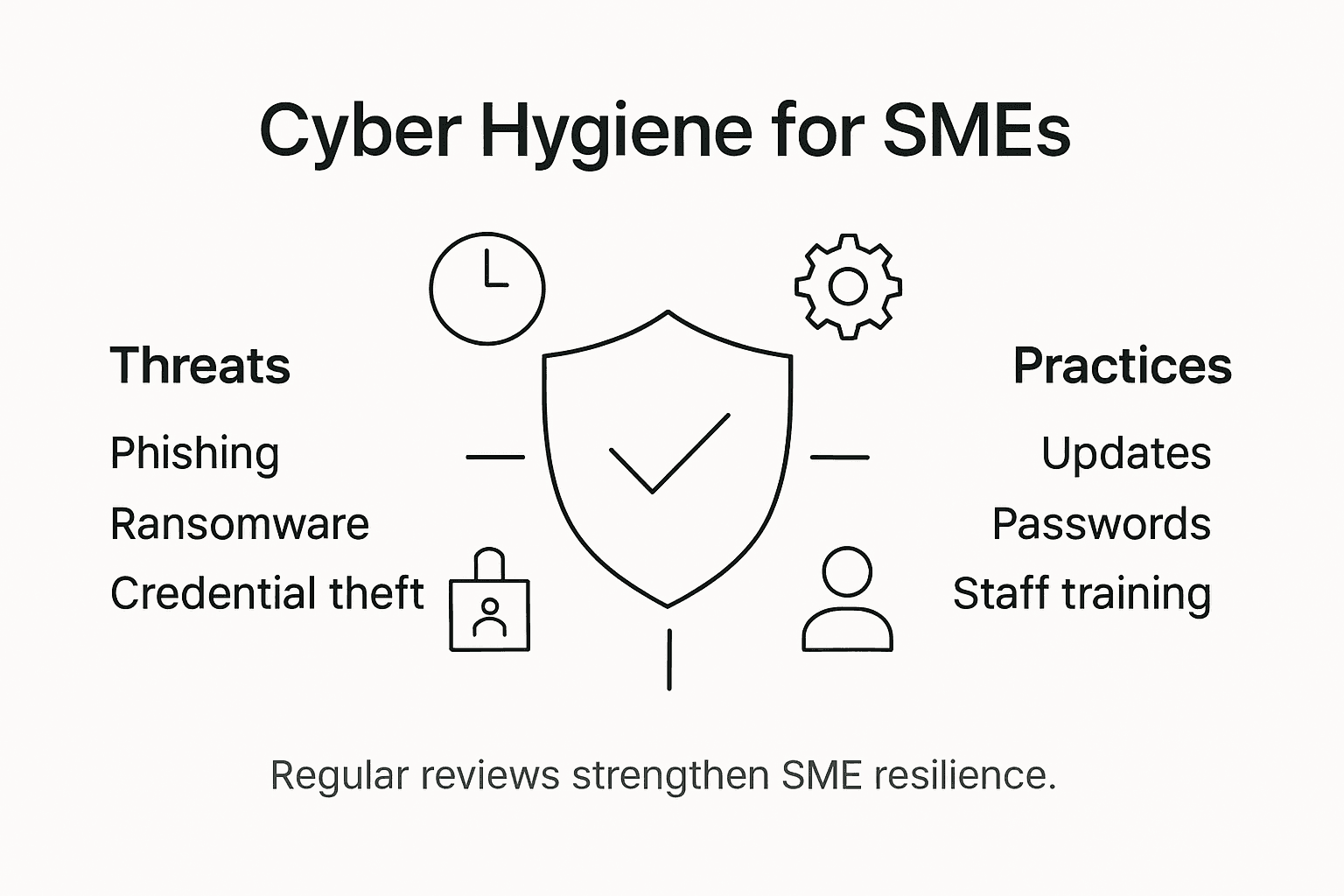
Phishing attacks targeting employee email systems
Ransomware exploiting unpatched software vulnerabilities
Social engineering techniques manipulating human psychology
Credential theft through weak password management
Insider threats arising from insufficient access controls
These vulnerabilities often stem from resource constraints and limited cybersecurity expertise. Research from the World Economic Forum reveals that smaller organisations are particularly attractive targets because they typically lack comprehensive security infrastructure. Cybercriminals understand that many SMEs operate with minimal security budgets, making them more likely to have unprotected network entry points, outdated software, and insufficient employee training.
Addressing these vulnerabilities requires a multifaceted approach that combines technological solutions with robust human-centric security practices. This means implementing systematic patch management, conducting regular security awareness training, and developing a proactive risk management strategy that identifies and mitigates potential weaknesses before they can be exploited.
Pro tip: Conduct quarterly vulnerability assessments to systematically identify and prioritise potential security gaps across your organisation’s digital ecosystem.
Essential Practices for Every Organisation
Cyber hygiene is not a luxury but a critical necessity for organisations seeking to protect their digital assets and maintain operational resilience. Baseline security measures defined by the Center for Internet Security provide a comprehensive framework for organisations to systematically reduce their cybersecurity vulnerabilities and create a robust defensive posture.
The essential practices that every organisation must implement include:
Comprehensive Malware Protection
Deploy advanced antivirus and anti-malware solutions
Configure real-time scanning and automatic updates
Systematic Patch Management
Establish regular software update protocols
Prioritise critical security patches
Robust Access Control
Implement multi-factor authentication
Apply principle of least privilege
Secure Network Configuration
Configure boundary firewalls
Segment network infrastructure
Continuous Vulnerability Management
Conduct regular security assessments
Monitor and remediate potential weaknesses
Successful implementation requires more than just technological solutions. Organisations must cultivate a security-aware culture where every team member understands their role in maintaining cyber hygiene. This involves ongoing training programmes, clear communication of security policies, and creating an environment where employees feel empowered to report potential security risks.
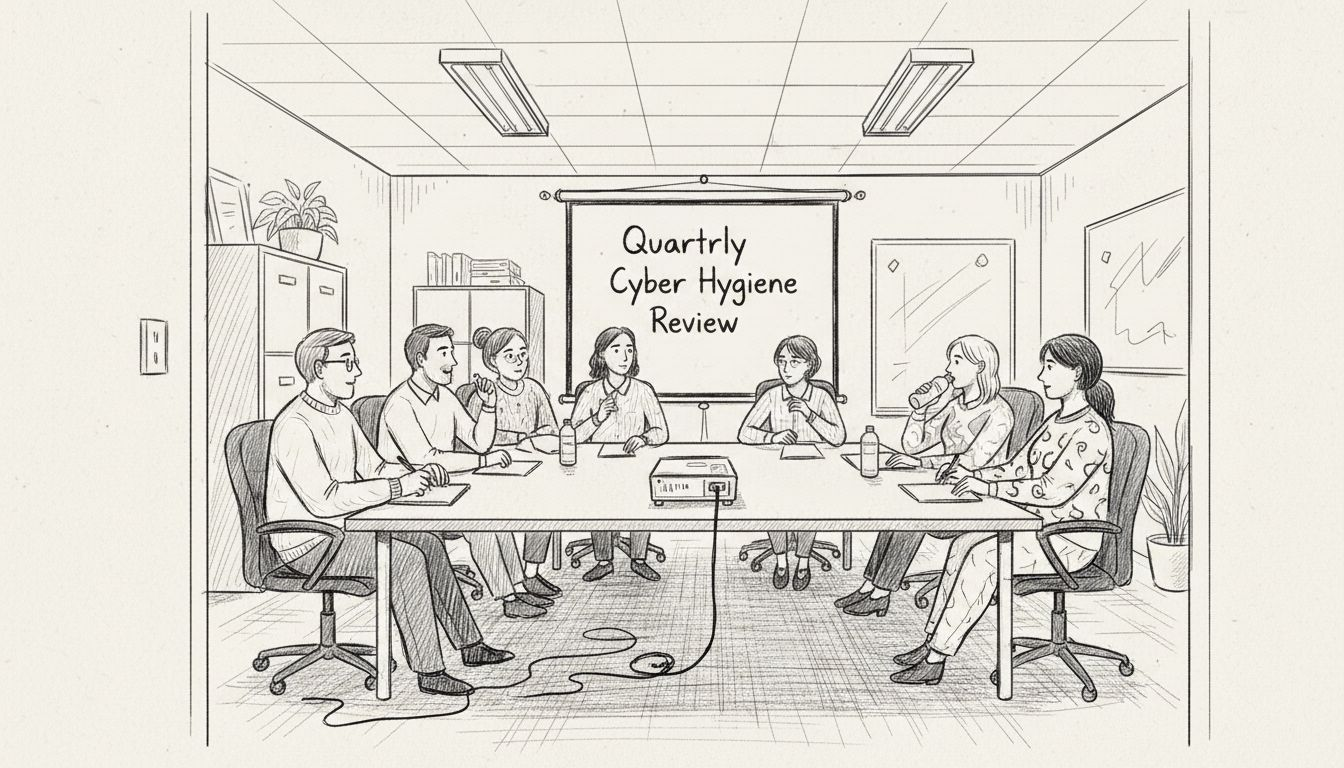
Moreover, these practices should not be viewed as static checkboxes but as dynamic, evolving strategies that adapt to the changing threat landscape. Small and medium enterprises must remain agile, continuously updating their approaches and investing in both technological defences and human capabilities.
Pro tip: Create a quarterly cyber hygiene review checklist that systematically evaluates and updates your organisation’s security practices and employee awareness levels.
Regulatory Requirements and Legal Obligations
The landscape of cybersecurity regulation in the United Kingdom is rapidly evolving, with increasing legal expectations placed on organisations to demonstrate robust digital protection mechanisms. The proposed Cyber Security and Resilience Bill represents a significant milestone in mandating comprehensive cybersecurity standards across various sectors, signalling a strategic shift towards more proactive and comprehensive legal frameworks.
Key regulatory requirements for organisations include:
Data Protection Compliance
Adhere to General Data Protection Regulation (GDPR)
Implement data minimisation and privacy-by-design principles
Incident Reporting Obligations
Mandatory breach notification within specified timeframes
Detailed documentation of cybersecurity incidents
Sectoral Security Standards
Industry-specific cybersecurity frameworks
Tailored compliance requirements for healthcare, finance, and critical infrastructure
Supply Chain Security
Verify security practices of third-party vendors
Establish robust vendor risk management protocols
Regular Compliance Audits
Conduct periodic security assessments
Maintain comprehensive compliance documentation
The legal landscape demands more than mere technical compliance. Research from the Global Cyber Security Capacity Centre emphasises that organisations must develop a holistic approach to cybersecurity that integrates legal, technological, and human factors. This means creating a comprehensive strategy that not only meets regulatory requirements but also demonstrates a genuine commitment to protecting digital assets and maintaining stakeholder trust.
Here is a summary of how regulatory requirements affect SME cybersecurity strategies in practice:
Legal Requirement | Practical SME Implication | Typical SME Challenge |
GDPR Compliance | Must protect personal data | Limited resources for oversight |
Incident Reporting | Requires timely notifications | Lack of internal expertise |
Supply Chain Security | Must vet third-party vendors | Insufficient vendor reviews |
Regular Audits | Ongoing internal/external assessments | Audit costs and documentation |
Small and medium enterprises must recognise that regulatory compliance is not a one-time achievement but an ongoing process of continuous improvement and adaptation. Organisations need to remain agile, continuously updating their security practices to align with emerging legal standards and technological developments.
Pro tip: Develop a dedicated compliance tracking system that automatically monitors regulatory changes and updates your cybersecurity practices in real-time.
Risks of Poor Cyber Hygiene for SMEs
Small and medium enterprises represent particularly vulnerable targets in the contemporary cybersecurity landscape, with inadequate cyber hygiene practices exposing them to devastating operational and financial risks. National Cyber Security Centre threat reports consistently highlight how poor security practices transform SMEs into attractive targets for sophisticated cyber criminals seeking to exploit systemic weaknesses.
The most significant risks arising from poor cyber hygiene include:
Financial Devastation
Potential ransomware attacks
Direct monetary losses from breaches
Costly system recovery and restoration
Reputational Damage
Loss of customer trust
Potential permanent brand destruction
Negative media coverage
Operational Disruption
Extended system downtime
Interruption of critical business processes
Potential permanent business closure
Legal and Compliance Consequences
Potential regulatory fines
Potential legal actions from affected parties
Breach of data protection requirements
World Economic Forum research reveals stark statistics that underscore these risks: approximately 43% of cyber-attacks specifically target small businesses, with an alarming 60% of affected organisations facing potential closure within six months of a significant security incident. These figures highlight the existential threat that poor cyber hygiene represents for SMEs.
The following table compares the impact of strong versus poor cyber hygiene practices for UK SMEs:
Aspect | Strong Cyber Hygiene | Poor Cyber Hygiene |
Financial Stability | Lower risk of losses | High risk of costly breaches |
Operational Continuity | Minimal downtime observed | Extended or permanent closure |
Regulatory Position | Maintains compliance easily | Faces fines and legal action |
Customer Trust | High trust and reputation | Damaged brand, loss of clients |
Moreover, cyber attacks are not random occurrences but calculated strategies targeting organisations with demonstrable security vulnerabilities. Cybercriminals systematically probe for weak access controls, unpatched systems, and inadequate employee training, transforming seemingly minor oversights into catastrophic security breaches.
Pro tip: Conduct a comprehensive cyber risk assessment every six months to proactively identify and mitigate potential vulnerabilities before they can be exploited.
Strengthen Your SME’s Cyber Hygiene with Expert Support
Many UK small and medium enterprises face the ongoing challenge of maintaining strong cyber hygiene to protect against phishing, ransomware, and insider threats as highlighted in the article. Without expert guidance, navigating patch management, risk assessments, and compliance can feel overwhelming and expose your business to devastating financial and operational risks. Ensuring your organisation adopts proactive security management and continuous monitoring is essential to building true digital resilience.
Discover how Freshcyber acts as the dedicated partner your business needs by delivering strategic leadership through our Virtual CISO (vCISO) service. We help you move beyond basic certification by designing and implementing a comprehensive security roadmap tailored to your priorities including vulnerability management, compliance with frameworks like Cyber Essentials, and robust risk treatment plans. Protect your critical assets against evolving threats with regular penetration testing and continuous vulnerability assessments guided by expert oversight.

Take control of your cyber hygiene today by partnering with Freshcyber. Visit https://freshcyber.co.uk now to explore our strategic solutions and learn more about how we can strengthen your defences. Build resilience, maintain compliance, and safeguard your organisation’s future with confidence.
Frequently Asked Questions
What is cyber hygiene?
Cyber hygiene refers to the set of practices and principles organisations implement to maintain robust digital security and protect critical information assets. It involves systematic approaches to reduce vulnerabilities and minimise security risks.
Why is cyber hygiene important for small and medium enterprises?
Cyber hygiene is crucial for SMEs as it helps mitigate potential cybersecurity threats, protects digital assets, and maintains operational resilience. Poor cyber hygiene can lead to financial losses, reputational damage, and operational disruptions.
What are common threats that impact SMEs due to poor cyber hygiene?
Common threats include phishing attacks, ransomware, social engineering tactics, credential theft, and insider threats. These threats exploit weaknesses in digital infrastructure and human behaviour, transforming minor vulnerabilities into significant security breaches.
How can small and medium enterprises improve their cyber hygiene?
SMEs can improve cyber hygiene by implementing regular software updates, maintaining robust password management protocols, conducting periodic risk assessments, and fostering a security-aware culture through employee training and clear security policies.
Recommended
Comments