Why Data Protection Matters for UK SMEs


Protecting sensitive information has become a daily concern for many business leaders across the United Kingdom. With the UK GDPR and Data Protection Act 2018 setting a high bar for compliance, organisations must manage personal data both lawfully and transparently. Effective strategies not only shield your business from regulatory risks but also position you for contracts and partnerships requiring strict data protection. This article offers practical ways to bolster your compliance and safeguard operational stability.
Table of Contents
Key Takeaways
Point | Details |
Data Protection Compliance | UK SMEs must adhere to UK GDPR and the Data Protection Act 2018 to protect personal information and maintain business integrity. |
Proactive Data Management | Establish clear protocols for consent, record-keeping, and data security to ensure compliance and reduce risks. |
Consequences of Non-Compliance | Failure to comply can result in hefty fines and reputational damage, highlighting the importance of effective data protection strategies. |
Building Trust and Resilience | Implementing robust data protection measures enhances customer trust, operational resilience, and eligibility for business opportunities. |
Defining Data Protection for SMEs
Data protection represents a critical operational requirement for UK small and medium enterprises, encompassing the systematic management and safeguarding of personal information. At its core, data protection involves preventing unauthorised access, use, or disclosure of sensitive details belonging to customers, employees, and business partners.
Under the UK legal framework, data protection is governed by specific principles established by the UK GDPR and Data Protection Act 2018. These regulations mandate that organisations process personal data lawfully, transparently, and with explicit purpose. For SMEs, this means implementing robust systems that collect, store, and manage information responsibly, ensuring every piece of data has a clear, justified reason for existing within business records.
The primary objectives of data protection include protecting individual privacy rights, preventing potential misuse of personal information, and maintaining organisational trust. This involves understanding what constitutes personal data - which ranges from names and contact details to more sensitive information like health records or financial identifiers. SMEs must develop comprehensive strategies that address data collection, storage, processing, and potential sharing, always prioritising the security and consent of data subjects.
Pro tip: Conduct a quarterly audit of your data handling processes to identify potential vulnerabilities and ensure ongoing compliance with current data protection regulations.
Key Legal Obligations in the UK
UK SMEs face a complex landscape of data protection legal requirements that demand careful navigation and proactive compliance strategies. The primary legal framework governing these obligations includes the UK General Data Protection Regulation (UK GDPR) and the Data Protection Act 2018, which establish comprehensive rules for handling personal information across all business sectors.
Businesses must comply with specific legal requirements that encompass multiple critical areas. These include maintaining a lawful basis for data processing, ensuring transparent data collection practices, implementing robust security measures, and respecting individual data subject rights. Key obligations involve registering with the Information Commissioner’s Office (ICO), paying mandatory data protection fees, and developing comprehensive policies for managing potential data breaches and subject access requests.
The legal landscape requires SMEs to demonstrate proactive data management. This means establishing clear procedures for obtaining valid consent, maintaining accurate processing records, and implementing data protection principles by design. Organisations must also be prepared to document their data handling processes, conduct regular privacy impact assessments, and train staff on proper data management techniques. Failure to meet these legal standards can result in significant financial penalties, with potential fines reaching up to £17.5 million or 4% of global annual turnover, whichever is higher.

Pro tip: Create a dedicated compliance folder containing your data protection policy, consent records, and breach response plan to streamline your legal obligations and demonstrate organisational readiness.
Here is a summary of key legal obligations for SMEs under UK data protection law:
Obligation Area | SME Action Required | Business Impact |
Lawful Basis | Establish legitimate reason for data use | Ensures legal compliance during audits |
Transparency | Inform individuals about data usage | Builds stakeholder confidence |
Registration | Register with Information Commissioner’s Office | Avoids regulatory penalties |
Security | Maintain technical and organisational measures | Minimises risk of data breaches |
Record-keeping | Maintain processing and consent records | Enables rapid response to requests |
Emerging Risks and Consequences of Non-Compliance
In today’s digital landscape, UK SMEs face increasingly complex and sophisticated data protection challenges that extend far beyond traditional compliance requirements. Cybersecurity risks have evolved dramatically, with malicious actors developing more nuanced and targeted approaches to exploiting organisational vulnerabilities, particularly among smaller businesses perceived as having weaker security infrastructures.
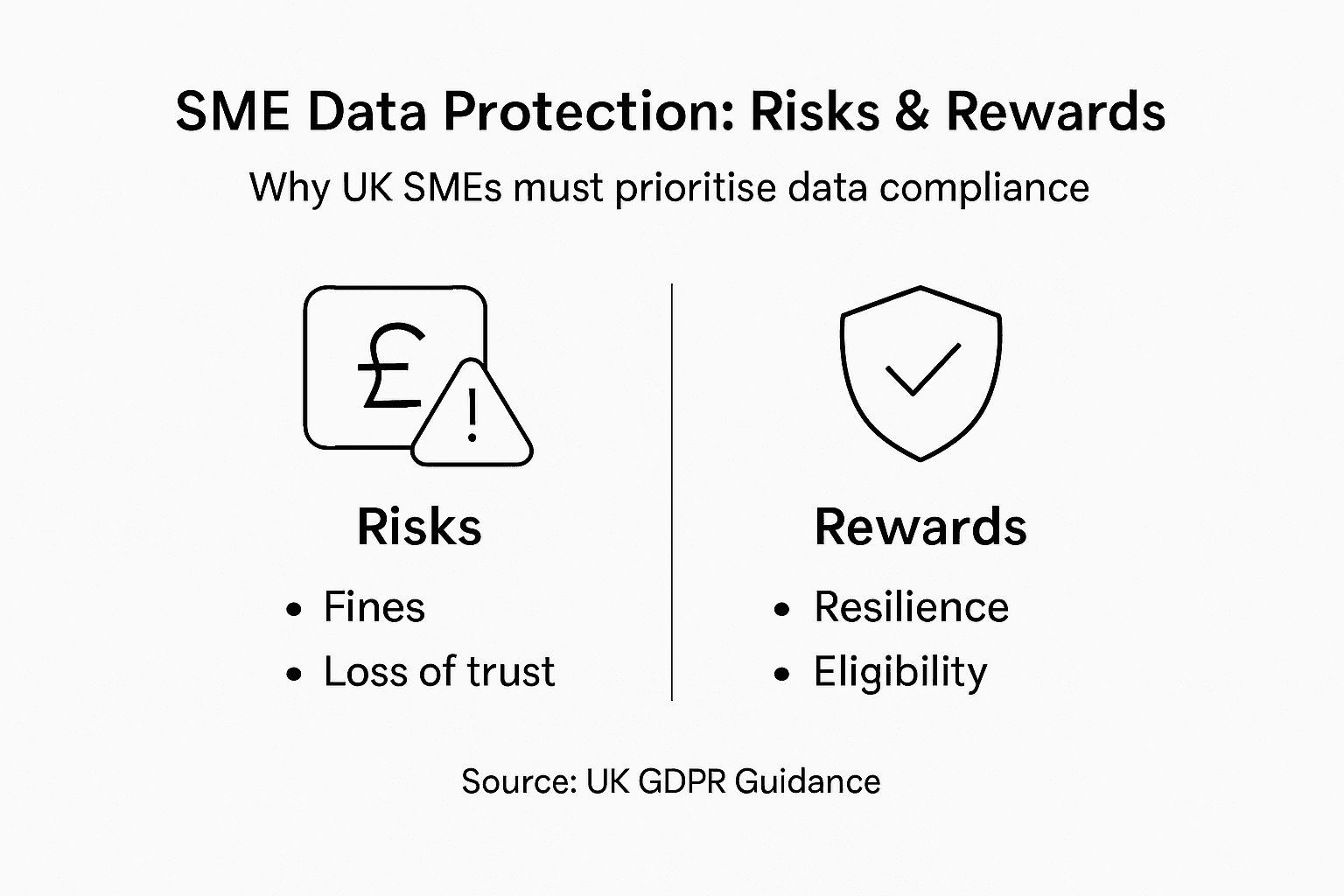
The potential consequences of data protection non-compliance are multifaceted and potentially devastating. Financial penalties represent just one dimension of risk, with regulatory bodies capable of imposing substantial fines up to £17.5 million or 4% of global turnover. Beyond monetary sanctions, businesses may encounter significant regulatory challenges that can fundamentally undermine their operational capabilities, including mandatory public disclosure of data breaches, temporary suspension of data processing activities, and potential criminal investigations.
Reputational damage often represents the most profound and long-lasting consequence of data protection failures. Modern consumers and corporate clients are increasingly sophisticated in assessing an organisation’s data management practices, with a single security incident potentially destroying years of carefully cultivated trust. This erosion of confidence can lead to immediate client attrition, difficulty acquiring new business partnerships, and long-term brand perception challenges that extend well beyond the initial security incident.
Pro tip: Develop a comprehensive incident response plan that includes immediate communication strategies, demonstrating transparency and proactive management in the event of a potential data protection breach.
The following table compares the main consequences of non-compliance versus compliance for UK SMEs:
Aspect | Non-Compliance Consequence | Compliance Benefit |
Financial Risk | Significant fines up to £17.5 million | Lower risk of penalties |
Reputation | Loss of client and partner trust | Enhanced brand credibility |
Operations | Possible suspension of data activities | Secured business continuity |
Growth | Ineligibility for some contracts | Access to new opportunities |
Practical Benefits: Trust, Resilience, Eligibility
Data protection represents far more than a regulatory checkbox for UK SMEs. It serves as a strategic foundation that transforms potential vulnerabilities into powerful competitive advantages, enabling businesses to build stronger relationships with customers, partners, and stakeholders through demonstrable commitment to digital responsibility.
At the core of effective data protection lies the critical ability to build lasting trust with clients. Modern consumers and corporate partners have become increasingly discerning, actively evaluating organisations based on their data management practices. By implementing robust protection strategies, SMEs signal their professionalism, reliability, and respect for individual privacy, which directly translates into enhanced business credibility and potential market opportunities.
Beyond trust, comprehensive data protection strategies contribute significantly to organisational resilience. Businesses that develop mature data handling practices create more predictable operational environments, reducing the likelihood of disruptive security incidents. These proactive approaches not only mitigate potential financial and reputational risks but also position SMEs as technologically sophisticated entities capable of navigating complex digital landscapes. Moreover, many government contracts, tender opportunities, and partnership agreements now explicitly require demonstrated data protection capabilities, making compliance a fundamental eligibility criterion for business growth.
Pro tip: Conduct an annual data protection maturity assessment to systematically identify improvement areas and demonstrate your ongoing commitment to securing sensitive information.
Building a Data Protection Strategy for SMEs
Developing a robust data protection strategy is not a one-size-fits-all process for UK small and medium enterprises. Each organisation must craft a tailored approach that aligns with its unique operational context, technological infrastructure, and specific data handling requirements. The foundation of an effective strategy lies in comprehensive understanding and systematic implementation of data protection principles.
The initial step involves developing comprehensive data protection policies that clearly define organisational responsibilities, data processing protocols, and security mechanisms. These policies must articulate precise guidelines for data collection, storage, access, and potential sharing, ensuring transparency and accountability at every stage of information management. Key components include creating a data inventory, mapping information flows, identifying potential risks, and establishing clear procedures for managing data subject rights.
Successful implementation requires a holistic approach that integrates technological solutions with organisational culture. SMEs should invest in staff training programmes that build data protection awareness, implement technical safeguards like encryption and access controls, and develop incident response frameworks. Security controls must be proportionate to the organisation’s risk profile, balancing robust protection with operational efficiency and user experience.
Pro tip: Create a dedicated data protection folder containing your policy documents, risk assessments, and training materials to centralise your compliance efforts and demonstrate organisational readiness.
Strengthen Your SME’s Data Protection with Expert Cyber Security Leadership
UK SMEs face increasing challenges in managing data protection under complex legal frameworks such as the UK GDPR and Data Protection Act 2018. Addressing vulnerabilities, maintaining compliance, and building organisational resilience are critical goals — yet many smaller businesses struggle to develop and implement effective security strategies that go beyond basic certification. Concepts like Cyber Essentials and proactive Vulnerability Management are essential components in transforming reactive data handling into strategic digital defence.

Freshcyber offers your business dedicated expertise through our Virtual CISO service, delivering executive-level leadership to fortify your security posture. From comprehensive gap analysis and ISO 27001:2022 implementation to continuous risk management and compliance oversight, we tailor strategies that ensure your SME is not only compliant but truly resilient against evolving cyber threats. Take the next step to protect your data, maintain your reputation, and unlock new opportunities with trusted guidance. Discover how at Freshcyber.
Frequently Asked Questions
What is data protection and why is it important for SMEs?
Data protection refers to the systematic management and safeguarding of personal information. It is crucial for SMEs to prevent unauthorised access to sensitive data, ensuring individual privacy rights and maintaining trust with customers and partners.
What are the key legal obligations for SMEs regarding data protection?
SMEs must comply with the UK GDPR and the Data Protection Act 2018, which includes establishing a lawful basis for data processing, ensuring transparency, registering with the Information Commissioner’s Office (ICO), and implementing robust security measures for personal data.
What consequences can SMEs face for non-compliance with data protection laws?
Consequences of non-compliance can include significant financial penalties, reputational damage, potential public disclosures of data breaches, and operational challenges such as suspension of data processing activities, which can severely undermine business capabilities.
How can SMEs build an effective data protection strategy?
SMEs can develop a data protection strategy by creating comprehensive policies to define responsibilities and protocols, conducting regular audits and assessments, investing in staff training, and implementing technical security measures, ensuring a holistic approach to data management.
Recommended
Comments