Security Audits: Protecting UK SMEs from Risk


Most British SMEs in finance and healthcare underestimate the impact of a single data breach, yet such incidents can result in fines topping £4 million. For IT managers, maintaining compliance with ISO 27001:2022 is now more than a regulatory checkbox - it is critical to avoiding costly disruptions and reputational damage. This overview explains how security audits specifically tailored for British organisations help uncover weaknesses and strengthen your business against fast-evolving cyber threats.
Table of Contents
Key Takeaways
Point | Details |
Importance of Security Audits | Security audits provide SMEs with a systematic review of their cybersecurity posture, helping to identify vulnerabilities and mitigate risks proactively. |
Types of Security Audits | Key audit types like Data Protection, Infrastructure Security, and Compliance Audits help SMEs focus on specific areas of risk and improve their overall security framework. |
ISO 27001:2022 Requirements | Adhering to the ISO 27001:2022 standard allows SMEs to establish effective information security management systems, ensuring compliance and enhancing stakeholder trust. |
Common Pitfalls and Solutions | SMEs should avoid treating audits as mere tick-box exercises and instead leverage them for strategic improvement by ensuring sufficient documentation and expert engagement. |
What Is a Security Audit for SMEs?
A security audit represents a comprehensive evaluation process designed specifically to protect small and medium enterprises from potential cybersecurity risks and vulnerabilities. For UK-based organisations, this strategic examination goes beyond mere compliance checkboxes, offering a detailed assessment of an organisation’s information security infrastructure, policies, and operational practices.
At its core, a security audit provides an independent, systematic review that assesses an organisation’s data protection practices. The process involves methodically examining an organisation’s existing security controls, technological systems, and procedural frameworks to identify potential weaknesses that could be exploited by cyber threats. Unlike generic assessments, security audits for SMEs are tailored to be proportionate and targeted, recognising that smaller businesses have unique risk profiles and resource constraints.
The audit typically encompasses multiple critical domains, including:
Network infrastructure security
Access management protocols
Data protection mechanisms
Compliance with regulatory requirements
Employee security awareness practices
Third-party vendor risk management
Conducting a security audit provides SMEs with strategic insights into their current cybersecurity posture, enabling proactive risk mitigation and strategic investment in protective technologies. By understanding potential vulnerabilities, businesses can develop robust defence strategies that protect their digital assets, customer data, and organisational reputation.
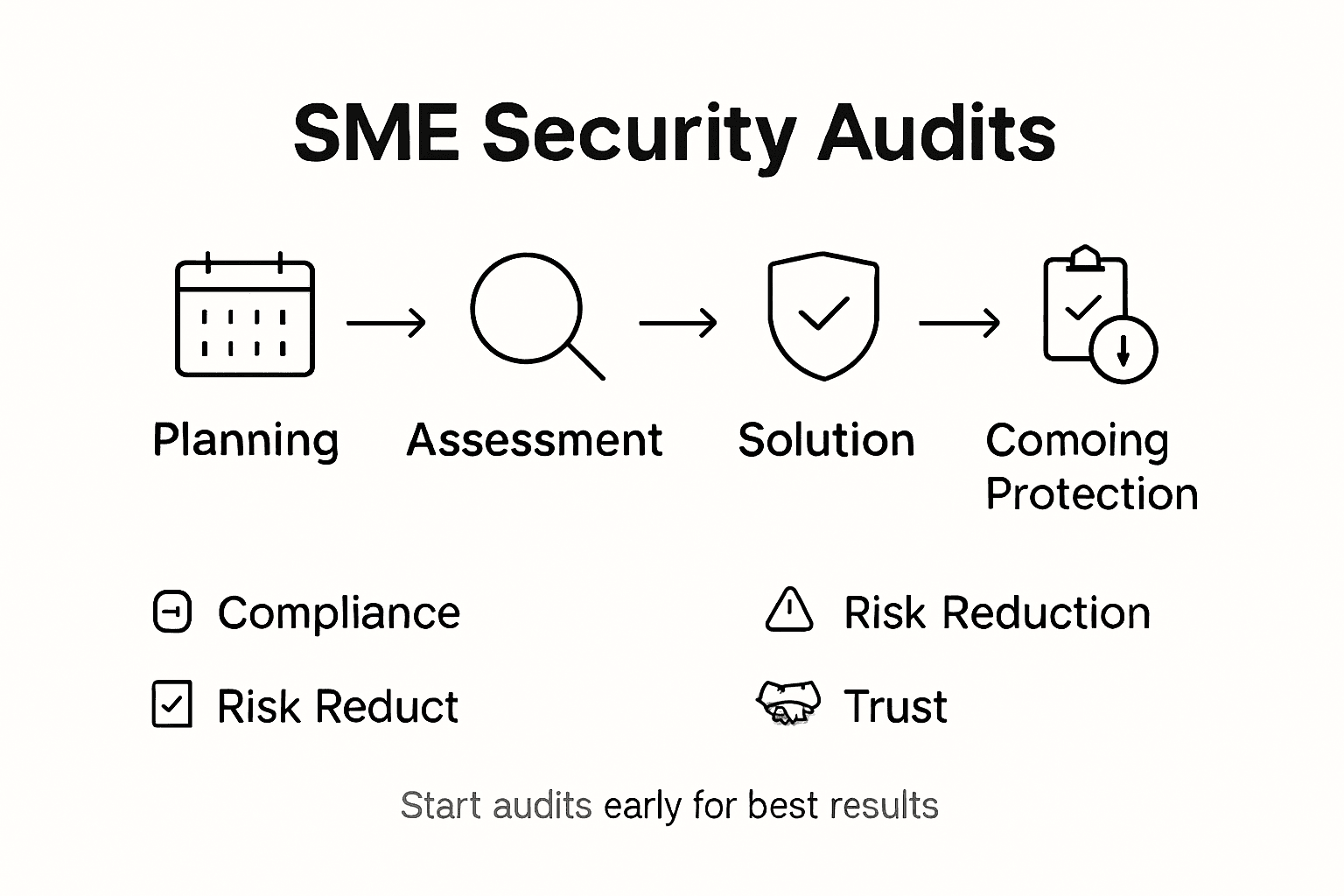
Pro tip: Schedule your first security audit before a major business expansion or when introducing new digital technologies to identify and address potential vulnerabilities preemptively.
Key Types of Security Audits Explained
Security audits are not one-size-fits-all processes, but rather a strategic collection of targeted assessments designed to uncover vulnerabilities and strengthen an organisation’s cybersecurity framework. Independent systematic reviews help organisations evaluate compliance with critical security standards across multiple domains, each serving a specific purpose in protecting digital assets.
The primary types of security audits for UK SMEs include:
Data Protection Audit
Focuses on how personal and sensitive information is collected, processed, and stored
Ensures compliance with UK GDPR and data protection regulations
Reviews data handling policies, consent mechanisms, and data retention practices
Infrastructure Security Audit
Examines technological systems, network configurations, and hardware vulnerabilities
Identifies potential entry points for cyber attackers
Assesses firewall effectiveness, network segmentation, and access controls
Compliance Audit
Verifies adherence to industry-specific regulatory requirements
Checks alignment with standards like Cyber Essentials, ISO 27001, and sector-specific guidelines
Provides documentation to demonstrate regulatory compliance
Penetration Testing
Simulates real-world cyberattacks to uncover system vulnerabilities
Uses ethical hacking techniques to test defence mechanisms
Provides actionable insights into potential security weaknesses
Each audit type offers unique insights, collectively providing a comprehensive understanding of an organisation’s cybersecurity posture. By combining these approaches, SMEs can develop a nuanced, proactive strategy for managing digital risks.
The following table contrasts key security audit types for UK SMEs and highlights their typical business impact:
Audit Type | Primary Purpose | Typical Business Impact |
Data Protection Audit | Safeguard personal data handling | Reduces regulatory fines and customer loss |
Infrastructure Security | Assess IT systems and network vulnerabilities | Minimises risk of service disruption |
Compliance Audit | Check regulatory and standards adherence | Ensures legal compliance and market access |
Penetration Testing | Simulate attacks to test defences | Uncovers critical weaknesses before attackers |
Pro tip: Consider rotating between different audit types annually to ensure a comprehensive and dynamic approach to cybersecurity risk management.
How the Security Audit Process Works
The security audit process is a meticulously structured approach designed to systematically evaluate an organisation’s cybersecurity defences and identify potential vulnerabilities. Auditors follow a comprehensive methodology involving strategic planning, risk assessment, and evidence gathering that goes far beyond a simple checklist approach.
The typical security audit process unfolds through several critical stages:
Pre-Audit Preparation
Initial scoping and objectives definition
Gathering preliminary documentation
Establishing audit boundaries and access requirements
Scheduling interviews and technical assessments
Comprehensive Assessment
Detailed document review of existing security policies
Technical infrastructure examination
Staff interviews to understand operational security practices
Vulnerability scanning and penetration testing
Reviewing access controls and authentication mechanisms
Evidence Collection and Analysis
Systematic documentation of findings
Quantifying identified risks
Comparing current practices against industry standards
Mapping vulnerabilities to potential business impacts
Reporting and Recommendations
Generating a comprehensive audit report
Prioritising identified vulnerabilities
Developing tailored remediation strategies
Providing actionable improvement recommendations
Successful security audits require a balanced approach that combines technical expertise, strategic thinking, and a deep understanding of an organisation’s unique operational context. By treating the audit as a collaborative process rather than a punitive examination, SMEs can transform potential weaknesses into opportunities for strengthening their cybersecurity posture.

Pro tip: Prepare internal documentation and assign a dedicated point of contact before the audit to streamline the process and demonstrate organisational readiness.
ISO 27001:2022 Audit Requirements for SMEs
The ISO 27001:2022 standard represents a critical framework for UK SMEs seeking to establish robust information security management systems. Auditors support SMEs by adopting scalable and risk-based approaches tailored to organisational complexity, ensuring that cybersecurity requirements remain proportionate and practical for smaller businesses.
Key audit requirements under the ISO 27001:2022 standard include:
Information Security Risk Assessment
Comprehensive identification of potential security risks
Systematic evaluation of threats and vulnerabilities
Development of risk treatment plans
Ongoing risk monitoring and management
Management Commitment and Responsibilities
Clear definition of information security roles
Executive leadership involvement in security strategy
Resource allocation for security initiatives
Establishing accountability mechanisms
Technical and Organisational Controls
Implementing comprehensive security measures
Developing access control protocols
Protecting information assets across digital and physical environments
Ensuring data confidentiality, integrity, and availability
Continuous Improvement Framework
Regular performance evaluations
Internal and external audit mechanisms
Tracking and addressing security incidents
Updating security policies based on emerging threats
The transition to ISO 27001:2022 requires SMEs to adapt their information security management systems, focusing on emerging areas like cloud security, threat intelligence, and secure coding practices. By embracing these standards, organisations can demonstrate their commitment to protecting sensitive information and building trust with stakeholders.
Pro tip: Conduct a preliminary gap analysis against ISO 27001:2022 requirements to identify areas needing immediate attention before the full audit process.
Practical Risks, Costs, and Common Pitfalls
Navigating security audits presents unique challenges for UK SMEs, with financial constraints and complexity often creating significant barriers to comprehensive cybersecurity implementation. The financial landscape reveals ongoing concerns about audit accessibility and affordability for smaller organisations, underscoring the need for strategic, cost-effective approaches to information security management.
Key risks and potential pitfalls for SMEs include:
Financial Constraints
High initial audit and implementation costs
Limited budget for comprehensive security measures
Potential resource allocation challenges
Risk of cutting corners due to financial pressures
Preparedness and Documentation
Insufficient internal security documentation
Lack of standardised security processes
Inadequate staff training and awareness
Incomplete or outdated security policies
Technical Complexity
Limited in-house cybersecurity expertise
Difficulty understanding technical audit requirements
Challenges implementing sophisticated security controls
Keeping pace with rapidly evolving threat landscapes
Compliance and Reporting Risks
Potential regulatory non-compliance
Incomplete or inaccurate risk assessments
Failure to demonstrate proper security governance
Increased vulnerability to potential data breaches
The most significant risk for SMEs lies not in the audit process itself, but in the potential consequences of inadequate preparation. Organisations that approach security audits as a checkbox exercise rather than a strategic opportunity for improvement are most likely to face substantial operational and financial risks.
Here is a summary of common SME audit pitfalls and proactive solutions:
Common Pitfall | Proactive Solution |
Insufficient documentation | Assign internal process owners |
Limited cybersecurity expertise | Engage external consultants |
Overlooking staff awareness | Implement ongoing training programmes |
Treating audits as mere tick-boxes | Leverage audits for security strategy |
Pro tip: Allocate dedicated internal resources to audit preparation and consider engaging external cybersecurity consultants to bridge expertise gaps and manage implementation costs effectively.
Strengthen Your SME Security with Expert Guidance from Freshcyber
The article highlights how UK SMEs face significant challenges like complex compliance requirements, limited cybersecurity expertise, and the risk of costly security gaps. Many businesses struggle to transform security audits into strategic opportunities rather than just checkboxes. These pain points call for a dedicated, expert partner to navigate vulnerabilities, manage risk, and ensure compliance with standards such as ISO 27001:2022.
Freshcyber offers you precisely that support through our flagship Virtual CISO service and comprehensive security solutions tailored especially for SMEs. From conducting detailed vulnerability assessments and penetration testing to leading ISO 27001 implementation, we act as your trusted security partner every step of the way. We help you build a dynamic Risk Register, create bespoke policies, and maintain ongoing compliance oversight, so you can confidently protect your digital assets and business reputation.
Explore more about how we address SME-specific risks at our SME Security and learn about simplifying regulatory complexities at our Compliance page. Take the first step towards digital resilience today by visiting Freshcyber.

Is your SME ready to move beyond ticking boxes and truly secure your business future? Discover how Freshcyber’s expert leadership and advanced security services can help you turn audits into powerful safeguards. Get in touch now to schedule a consultation and start your journey to proactive cyber defence.
Frequently Asked Questions
What is a security audit for SMEs?
A security audit is a comprehensive evaluation process aimed at identifying and mitigating cybersecurity risks for small and medium enterprises, assessing their data protection practices, infrastructure, and compliance with regulations.
What are the key types of security audits?
The key types of security audits include Data Protection Audits, Infrastructure Security Audits, Compliance Audits, and Penetration Testing, each focusing on different aspects of an organisation’s cybersecurity framework.
Why is conducting a security audit important for SMEs?
Conducting a security audit helps SMEs identify vulnerabilities, comply with regulations, and develop robust defence strategies that protect their digital assets, customer data, and overall reputation.
How can SMEs prepare for a security audit?
SMEs can prepare for a security audit by gathering internal documentation, defining clear objectives, establishing a dedicated point of contact, and ensuring staff are trained and aware of security practices.
Recommended
Comments